Selecting the optimal attic insulation in Colorado requires consideration of the region’s cold winters, strong temperature swings, and the need for high thermal resistance (R-value). While many materials are available, performance depends not only on the insulation type but also on installation quality and the ability to create a continuous thermal boundary. In climate zones typical of Colorado, achieving recommended attic insulation levels (often R-49 to R-60) is critical for energy efficiency, comfort, and moisture control.
Fiberglass batt insulation, though widely used, often underperforms in real-world applications due to installation challenges. Batts are manufactured in fixed sizes and rely on precise fitting between framing members; however, irregular joist spacing, obstructions (wiring, plumbing, recessed lighting), and installer error frequently result in gaps, compression, or voids. These discontinuities significantly reduce effective R-value by allowing convective heat flow and thermal bridging. Even small gaps can disproportionately impact performance, making batts a less reliable option unless installed with exceptional care and attention to detail.
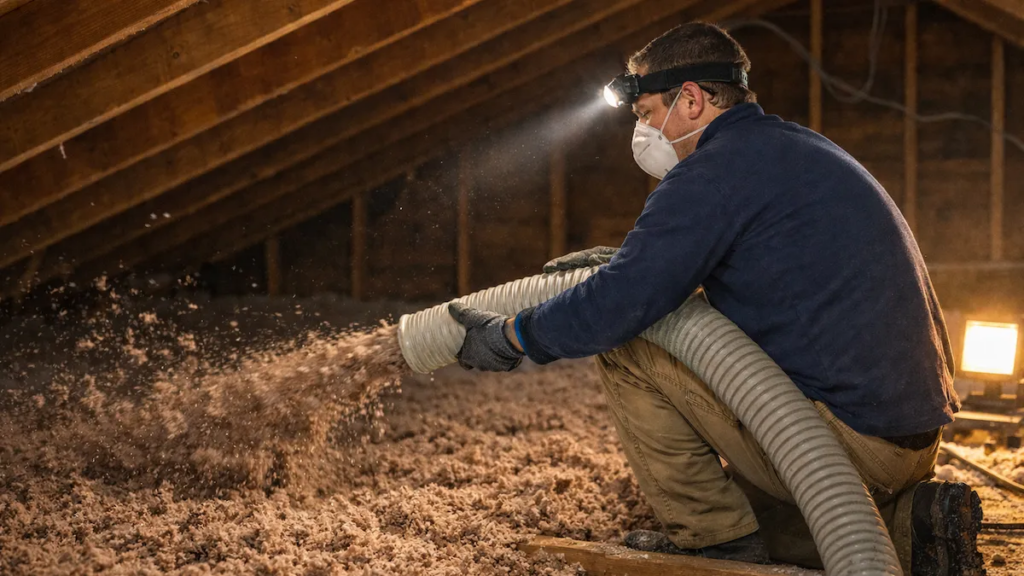
Blown-in insulation materials—specifically cellulose and loose-fill fiberglass—offer superior coverage characteristics. Their small particle size and ability to conform to irregular spaces allow them to fill voids, encapsulate obstructions, and create a more uniform thermal layer across the attic floor. This results in fewer air pockets and a more consistent R-value across the assembly. Dense-pack cellulose, in particular, also provides some resistance to air movement due to its density, further enhancing overall performance. These materials are especially effective in retrofit applications where existing conditions make batt installation impractical or inconsistent.
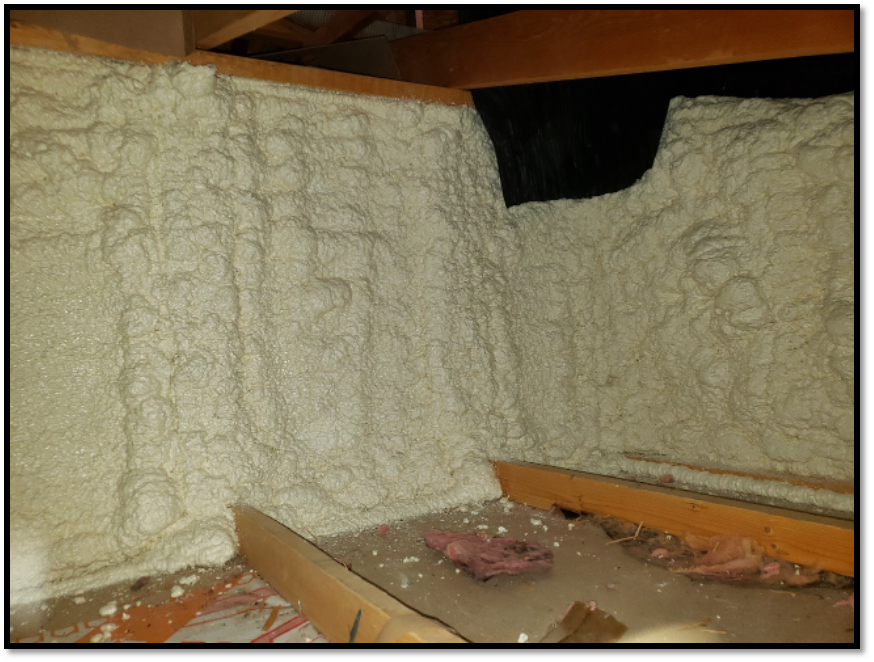
Spray foam insulation, while typically more expensive, plays a critical role in air sealing, which is just as important as thermal resistance. Closed-cell or open-cell spray foam can be strategically applied to seal penetrations in the attic floor—such as around electrical boxes, plumbing chases, and top plates—as well as along the backs of kneewalls and other transition points in the building envelope. By reducing uncontrolled air leakage, spray foam helps maintain the integrity of the thermal boundary and improves the effectiveness of any additional insulation installed. In many cases, a hybrid approach—air sealing with spray foam followed by blown-in insulation—provides the best balance of performance, durability, and cost-effectiveness.
If you would like to learn some practical building science so you can understand what is happening in your home, check out our new course Practical Home Performance.